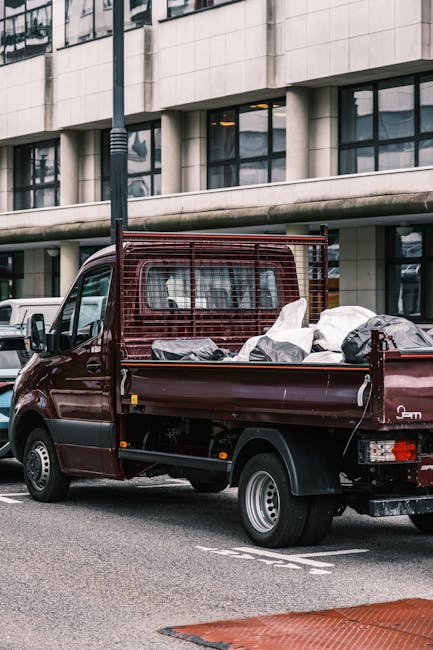
Avoid hidden rubbish removal charges in Colindale: a practical guide to clearer pricing
If you are trying to avoid hidden rubbish removal charges in Colindale, you are probably dealing with the same headache most people face: a quote that looks neat at first, then somehow grows arms and legs once the team turns up. Extra labour. Access fees. Disposal surcharges. A "small" load that suddenly isn't small. It happens, and it is frustrating.
This guide is here to help you spot the warning signs, ask the right questions, and compare rubbish removal quotes without getting caught out. We will look at how pricing usually works, which add-ons are fair, which ones should make you pause, and how to plan a clearance so the final bill matches the quote much more closely. If you live or work around Colindale, where flats, estates, basements and busy streets can all affect collection costs, this is especially worth knowing.
By the end, you will know how to check a quote properly, what to clarify before booking, and how to keep the whole thing calm. Truth be told, a bit of preparation saves more money than most people expect.
Why hidden rubbish removal charges in Colindale matter
Hidden charges are not just an annoyance. They can change how you budget, how quickly you can clear a property, and whether the job feels fair at the end. In Colindale, that matters a lot because many jobs are not simple "load and go" collections. You may be dealing with a top-floor flat, a tight stairwell, restricted parking, controlled access, or a mixture of furniture, bagged waste and awkward bulky items.
That local reality is exactly why vague pricing causes trouble. A quote may look reasonable until the team arrives and says the lift is too small, the van cannot park close enough, or the items are heavier than expected. Some of those adjustments are legitimate. Some are less clear. The difference is usually in the detail you asked for up front.
To be fair, most reputable waste removal companies do not set out to mislead people. But if you only give a rough description, you are more likely to get a rough price. And once the team is standing in your hallway with a van waiting outside, it becomes harder to challenge an extra fee politely.
That is why clear expectations matter. They protect your budget, save time, and reduce that horrible "what now?" feeling when the invoice arrives. No one enjoys haggling over rubbish at the kerbside. Nobody.
How rubbish removal pricing usually works
Most rubbish removal quotes are built from a few core factors. The company estimates how much waste you have, how easy it is to collect, what type of items are included, and where the waste needs to go. If any of those details change, the price can change too.
Here is the usual logic behind a quote:
- Volume: how much space the waste will take in the vehicle, often estimated in cubic yards, cubic metres, or by load size.
- Weight: heavy waste can cost more to dispose of than lighter mixed waste.
- Labour: stairs, long carries, dismantling, or extra handling can all affect the fee.
- Waste type: items such as mattresses, fridges, appliances, plasterboard, or potentially hazardous materials may need special handling.
- Access: parking restrictions, narrow roads, upper floors, basement access, or complicated entry arrangements can add time.
- Disposal route: some items require specific recycling or transfer processes, which can affect cost.
A clear provider will usually explain which of these factors are already included and which could trigger an extra charge. That distinction matters more than people think. If a quote says "from GBPX," the real question is: from where, and under what conditions?
One practical tip: if a company is giving you a phone estimate, ask whether it is based on photos, item counts, or a site visit. A quote based on a few blurry pictures can be useful, but it is only as good as the information you send. A photo of a single sofa does not always tell the full story when there is also a hallway full of bagged waste tucked behind it. Sneaky little details like that make all the difference.
If you want a clearer starting point, review the provider's pricing and quotes guidance before booking. It can help you understand how transparent pricing is presented and what information you may need to supply.
Key benefits and practical advantages
Choosing a rubbish removal service with clear, upfront pricing is not just about saving money, although that is obviously part of it. It also makes the whole job easier to manage.
- Better budgeting: you can compare providers properly rather than comparing a headline number that changes later.
- Less stress on the day: there is less awkward discussion at the door when the team arrives.
- Faster decisions: if the price is clear, you can get on with the clearance instead of delaying it.
- Fewer disputes: clear scope means fewer arguments about what was or was not included.
- Better planning: you can sort, move, or dismantle items in advance if that reduces cost.
- More trust: transparent pricing is usually a good sign that the rest of the service is organised too.
There is another quiet benefit people miss. Once you know how pricing is built, you can often lower the cost by preparing the job properly. That might mean grouping similar items together, removing loose rubbish from a garden path, or making sure parking access is available at the right time. Small things, yes, but they add up.
Expert summary: the easiest way to avoid hidden rubbish removal charges in Colindale is to make the job easy to quote accurately. The clearer the description, the fewer surprises later.
Who this guide is for and when it makes sense
This is for anyone in Colindale who wants rubbish cleared without paying more than expected. That includes:
- homeowners clearing out a spare room, loft, garage or garden
- tenants moving out and needing bulky waste removed quickly
- landlords dealing with leftover items after a tenancy
- office managers clearing desks, chairs and packaging
- small businesses disposing of stock, old fixtures or mixed waste
- people handling a bigger life admin moment, such as a bereavement or a family move
It also makes sense if your waste is awkward. For example, a sofa on the third floor in a building near Colindale Station is rarely the same job as a few bin bags from a ground-floor house. One is straightforward. The other can involve access issues, carry distance and timing around parking. The bill should reflect those realities, but only when they are explained clearly in advance.
If your needs are broader than a one-off collection, it may help to look at services such as home clearance, flat clearance or office clearance. Those pages can help you match the service to the job rather than forcing the job into the wrong category. That alone can prevent extra charges.
Step-by-step guidance
If you want the simplest route to a fair price, follow this sequence. It is not glamorous, but it works.
- Make a full list of items. Include large items, bagged waste, mixed materials, and anything awkward like mattresses or appliances.
- Take clear photos. Wide-angle shots from different corners are much more useful than one close-up. Try to show access points too.
- Note any access issues. Stairs, lifts, controlled entry, parking restrictions, long carries, or timed entry gates all matter.
- Separate special items. Fridges, freezers, hazardous materials and confidential documents may need separate handling.
- Ask what is included. Check labour, loading, disposal, recycling, and VAT if relevant. Ask what is not included.
- Confirm the charging method. Is it by volume, weight, item count, or hourly labour? If you do not know, ask.
- Request a written quote. Even a short written confirmation helps avoid memory-based misunderstandings later.
- Clarify the trigger for extras. Find out what would cause the price to change on arrival, and by how much.
- Prepare the site. Put waste in one place, clear a path, unlock access, and make parking as easy as possible.
- Check the final scope before work begins. A two-minute conversation before lifting starts can save a lot of back-and-forth.
That is the boring version. The useful version. A lot of hidden charges disappear simply because everyone agrees on what is being removed before the van door opens.
Expert tips for better results
Here are the things experienced customers tend to do well, often without thinking about it.
1. Use photos, but do not rely on one angle
A single photo can hide a surprising amount. If you are quoting a loft clearance, for example, show the loft hatch, the stairs, and the items themselves. A provider should be able to estimate more accurately when they can see the whole path, not just the pile.
2. Ask about item categories, not just "waste"
Mixed rubbish is one thing. Furniture, appliances, green waste, building rubble and confidential paperwork are different beasts. If the company treats every item as the same, you may end up paying later when the truck is already on-site. Not ideal.
3. Make access boringly easy
The less drama, the better. Leave keys ready, unlock gates, move cars if possible, and tell neighbours if parking is tight. In Colindale, where street space can be limited, that sort of preparation can be the difference between a smooth pickup and a job that feels bigger than it should.
4. Look for straight answers
If a company cannot clearly answer "What could make this cost more?" then that is a warning sign. A transparent provider will usually explain their approach without getting vague or defensive.
5. Ask whether recycling and disposal are included
People often forget to ask this one. Some firms include all disposal costs; others add them later. Better to know before collection than after. Your wallet will thank you quietly.
For certain jobs, a specialist service can be a better fit. For instance, bulky household items may be better handled through furniture clearance or mattress and sofa disposal, while heavy DIY debris might need builders waste clearance. Matching the job properly reduces the risk of pricing surprises.
Common mistakes to avoid
Most hidden charges do not appear out of nowhere. They usually show up after a few avoidable mistakes.
- Giving a vague description: "just a few bits" is not enough detail for a reliable quote.
- Forgetting access issues: a basement flat with a narrow stairwell is not the same as ground-floor kerbside pickup.
- Not mentioning awkward items: appliances, mattresses and heavy rubble can change the quote.
- Assuming labour is included: some quotes only cover the vehicle and disposal, not the full collection effort.
- Not asking about VAT or extra fees: this can be the point where the price jumps unexpectedly.
- Booking too quickly: the first quote is not always the best one. Sometimes it is just the fastest.
- Leaving the sorting until the van arrives: if the team has to wait while items are separated, extra labour may follow.
A common real-world example is a homeowner who books a clearance for a "garage full of junk" and later learns that the garage also contains plasterboard offcuts, a broken freezer and a few paint tins. Suddenly the quote changes. Not because anyone is being dramatic, but because the disposal rules and handling need are different.
Another one: an office clear-out where confidential documents are mixed in with old furniture. If shredding or secure disposal was not discussed earlier, that can become an avoidable extra. For jobs like that, services such as confidential shredding are worth considering before the clearance starts.
Tools, resources and recommendations
You do not need fancy software or a complicated system. A few simple tools are enough to make the process much safer for your budget.
- Your phone camera: take room-by-room photos and a short video if the job is complicated.
- A notebook or notes app: list item types, quantities, and access details.
- Measuring tape: helpful for bulky furniture, appliance width, or checking whether an item can fit through a doorway.
- Parking awareness: if access is tricky, note nearby parking restrictions or loading space before you book.
- A simple comparison sheet: compare what each provider includes, not just the headline price.
Useful service pages on this website can also help you understand the scope of different jobs before you request a quote. If you are disposing of appliances, for example, fridge and appliance removal can be a better fit than a broad general clearance. For garden jobs, garden clearance is the more relevant starting point. And if you are clearing out a property from top to bottom, house clearance may be the best match.
There is also value in checking the company's wider standards pages before you commit. A provider that publishes its approach to health and safety, insurance and safety and recycling and sustainability is often more likely to be organised in day-to-day work too. Not always, of course, but often enough to matter.
Law, compliance, standards and best practice
Rubbish removal is not just a pricing issue. There are compliance and responsibility questions in the background as well. You do not need to be an expert, but you should know the basics.
In the UK, waste has to be handled responsibly and passed to appropriate facilities. For householders and businesses alike, that usually means using a provider that can dispose of waste correctly and keep records where needed. If a company offers a suspiciously cheap quote and cannot explain where the waste is going, that is a red flag. Maybe not a dramatic one, but enough to take seriously.
For business customers in particular, there can be extra expectations around secure disposal, record-keeping, and separating different waste streams. Office items like paper records, electronics and furniture may need different handling methods. If your job involves equipment, packaging, or sensitive material, ask how it will be dealt with before collection day.
Best practice is simple enough:
- be honest about what the waste includes
- describe any special items clearly
- check whether recycling is part of the service
- avoid booking with a provider who is vague about disposal methods
- keep a written quote or message record for reference
If you are dealing with hazardous items, do not treat them like ordinary rubbish. They need specific handling. A suitable route may be hazardous waste disposal, depending on the material involved. That is one area where "we'll just take it all" should prompt a careful follow-up question, not relief.
Options, methods, and comparison table
People in Colindale usually compare three broad approaches: a man-and-van style rubbish collection, a skip, or a more tailored clearance service. Each has strengths, and each has its own trapdoors if you do not match it to the job.
| Option | Best for | Possible downside | Hidden charge risk |
|---|---|---|---|
| Rubbish removal service | Mixed waste, bulky items, quick turnaround | Price can vary if access is difficult or waste is misdescribed | Medium if the scope is unclear |
| Skip hire | DIY waste, ongoing projects, loading at your own pace | Permit, placement and loading rules may apply | Medium to high if you are unsure what can go in a skip |
| Specialist clearance | House, office, loft, garage, or specific item types | May cost more if the job is small and simple | Low when the service matches the job closely |
If you are unsure what belongs in a skip, the page on what can go in a skip is a sensible read before you decide. That said, a skip is not always the cheapest or easiest route, especially in busy residential streets or where parking is tight. In those cases, a direct collection can actually be simpler.
The main point is this: cheap is not always cheap if the model does not fit your waste. A modestly priced, well-scoped clearance can work out better than a bargain quote that grows once the job starts.
Case study or real-world example
Imagine a Colindale resident clearing a one-bedroom flat after a move. The original list sounds simple: one wardrobe, one sofa, a mattress, three bags of clothes, and some odds and ends. On paper, it sounds like a straightforward collection.
Then the details emerge. The flat is on an upper floor. The lift is small. The sofa does not quite fit cleanly through the hallway turn. Parking near the entrance is limited for part of the day. On top of that, there is an old fridge in the kitchen and a stack of cardboard in the bedroom that was not mentioned at first. Suddenly the quote changes.
Now, none of that is outrageous. A fair company should charge for the actual work involved. But if the customer had shared the extra items, photos of the access route, and the parking situation from the start, the quote could have been much closer to the final amount.
That is the pattern you see again and again. The hidden charge is often not "hidden" at all. It was just unspoken. And once you know that, the fix becomes pretty clear: better information in, fewer surprises out.
A similar thing happens with bigger clearances such as garage or loft jobs. If a pile looks manageable but turns out to include mixed waste, broken storage, old equipment and a few damp boxes tucked in the corner, the disposal work is different. Services like garage clearance and loft clearance are designed for that sort of mixed, awkward workload.
Practical checklist
Use this checklist before you book. A few minutes here can save you a proper headache later.
- List every item you want removed, not just the main pieces.
- Take photos from several angles in good light.
- Note access details such as stairs, lifts, parking and distance from the road.
- Separate special items like appliances, mattresses, confidential papers or hazardous materials.
- Ask what the quote includes and what may cost extra.
- Confirm how the price is calculated volume, weight, labour or item-based.
- Check whether recycling and disposal fees are included.
- Get the quote in writing where possible.
- Make access easy on the day by clearing the route and arranging parking.
- Review the final scope before work starts and raise any changes early.
If your clearance is connected to a larger property project, you may also want to look at furniture disposal or waste removal for a broader view of service options. Sometimes the right answer is not the most obvious one. Happens more often than you would think.
Conclusion
The best way to avoid hidden rubbish removal charges in Colindale is surprisingly straightforward: describe the job properly, ask direct questions, and make sure the quote matches the real-world conditions of your property. If the waste is easy to access and clearly described, the price is much easier to trust. If the job is complicated, a good provider will explain why the cost changes rather than springing it on you later.
That is the standard worth looking for. Not the cheapest number on the page. The clearest one.
And once you know how to compare quotes properly, you are in a much stronger position. Less stress, fewer surprises, better value. Simple as that, really.
If you are ready to move forward, take the next step with a quote request that includes photos, access notes and item details. A little honesty upfront makes the whole process smoother, and that small bit of effort usually pays off.
Get a free quote today and see how much you can save.
Sometimes the calmest clearance is the one where nothing unexpected shows up at the door.
Frequently Asked Questions
What are hidden rubbish removal charges?
Hidden rubbish removal charges are extra costs that appear after the first quote, often because the provider did not have enough information about the waste, access, or special items. They can include labour add-ons, disposal surcharges, or fees for awkward collections.
How can I avoid extra charges on rubbish removal in Colindale?
Give a full item list, share clear photos, mention access issues, and ask what the quote includes. Written confirmation helps too. The more specific you are, the less room there is for surprises.
Is a cheap rubbish removal quote always a bad sign?
Not always. But if the quote is much lower than others and the provider cannot explain what is included, treat it carefully. Sometimes a low headline price is just the first step in a longer bill.
Should I expect extra costs for stairs or lack of parking?
Often, yes. Stairs, long carries, difficult parking or restricted access can increase labour time. The key is whether those charges were explained before booking. If they were, that is normal. If not, ask questions.
Do appliance removals cost more than general rubbish?
They can. Fridges, freezers and other appliances may need special handling or disposal routes. It is better to mention them separately rather than bury them in a general description of waste.
Can I save money by preparing the rubbish myself?
Yes, often. Grouping waste together, clearing access routes, and separating special items can reduce the time and effort needed. Just do not move anything unsafe or heavy if it could put you at risk.
What should be included in a proper quote?
A proper quote should clearly state what items are included, how the price is calculated, whether disposal and labour are covered, and what could trigger extra charges. If it is just a vague estimate, ask for more detail.
Are written quotes better than phone estimates?
Yes. Phone estimates are useful, but written quotes are easier to compare and refer back to later. Even a short message confirming the scope can prevent misunderstandings.
What if the waste changes after I get a quote?
Tell the provider as soon as possible. If you add more items or discover something special, the price may need adjusting. Early honesty is far better than a surprise on collection day.
Does Colindale location affect rubbish removal pricing?
It can. Local access, traffic, parking limitations and building layout all play a part. A clear address and access description help the provider give a more accurate quote for the area.
Should I use a skip or a rubbish removal service?
It depends on the job. A skip can suit ongoing DIY work, while a rubbish removal service is often better for mixed waste, bulky items and properties with difficult access. Compare the total cost and convenience before deciding.
How do I know if a rubbish removal company is trustworthy?
Look for clear pricing, sensible questions about the job, transparent service information, and a willingness to explain what is included. If they are vague before booking, they are unlikely to become clearer afterwards.
What if I have confidential documents or hazardous waste?
Do not mix them with ordinary rubbish. Ask for a suitable specialist service such as confidential shredding or hazardous waste disposal. Those items need proper handling and should never be treated casually.
Can I reduce charges by booking the right type of clearance page?
Yes. Matching the job to the right service, such as house clearance, garage clearance or furniture clearance, helps the quote reflect the real work. It is a small step that often improves accuracy quite a lot.